
Key Takeaways
- Find the best Milan neighbourhood for your trip, from sightseeing and shopping to business, football, nightlife, or family trips.
- Book your stay in Duomo or Brera for quick access to the city’s highlights, or pick CityLife or Isola for a peaceful base and easy metro travel.
- Look beyond the historic centre to find better-value stays, a local feel, and quick metro access to Milan’s top sights.
- Book a stay in Porta Nuova, Garibaldi, or Milano Centrale if you need convenient transport links for business trips or airport travel.
- Stay in Navigli for lively nightlife, Quadrilatero della Moda for luxury shopping, or San Siro if you’re in Milan for a football match.
How to Choose the Best Area to Stay in Milan
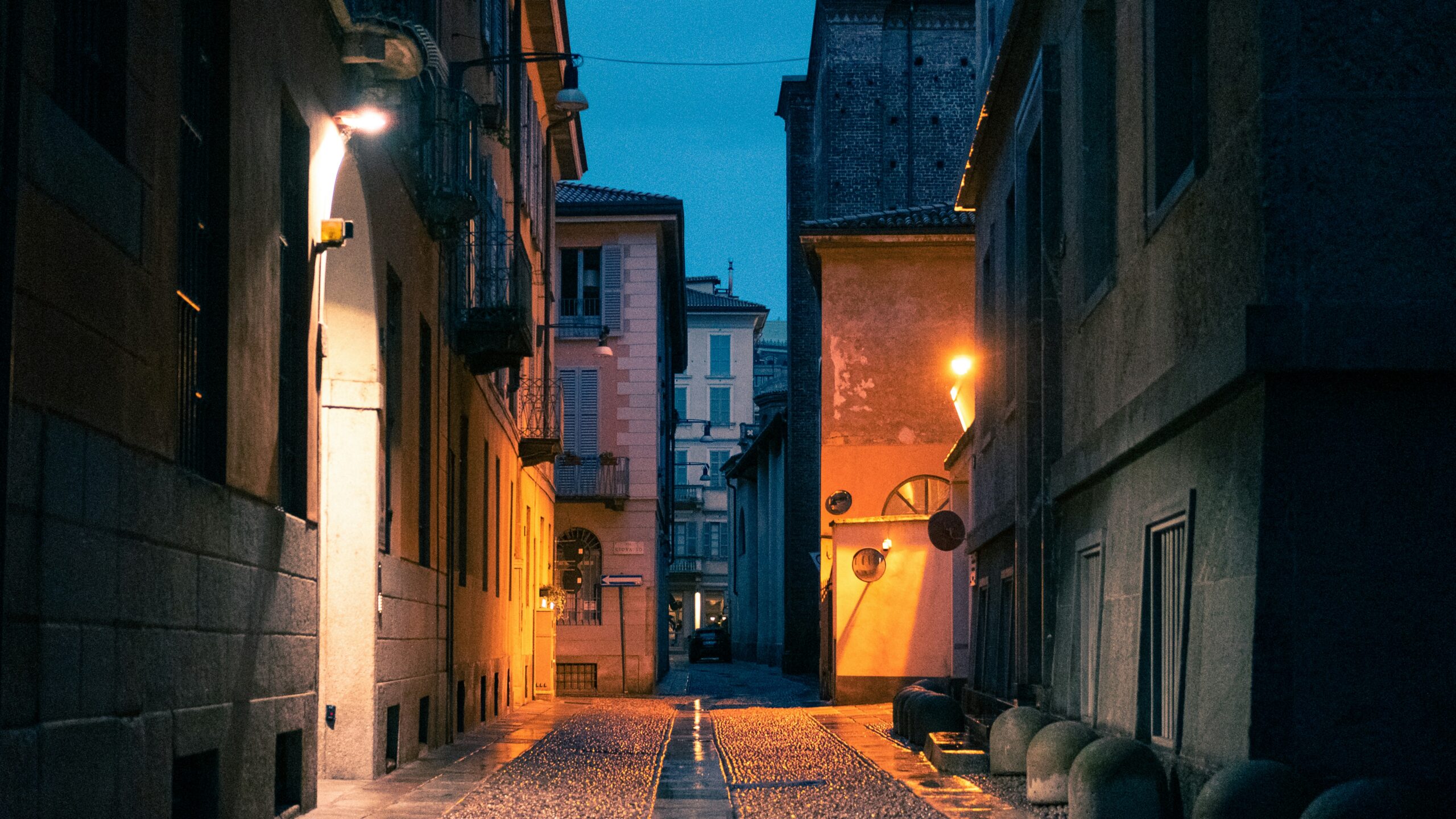
My husband’s family has lived and worked in Milano for generations; Via Borgospesso, Via Vanvitelli, Via Porpora, Via Ponte Seveso, a lot of memories and different vibes for different eras, in fact, Milan doesn’t really behave like one city. It behaves like a handful of villages that got stitched together over a couple of centuries and never quite lost their own personalities. Walk fifteen minutes in almost any direction from the Duomo, and the whole mood changes, the shopfronts, the noise level, even the pace people walk at. So if you’re wondering where to stay in Milan, the answer isn’t really one-size-fits-all. It depends on the kind of trip you’re planning and what you want to experience.
Here’s the honest version, organized around the kind of trip you’re actually taking rather than a generic top-five list
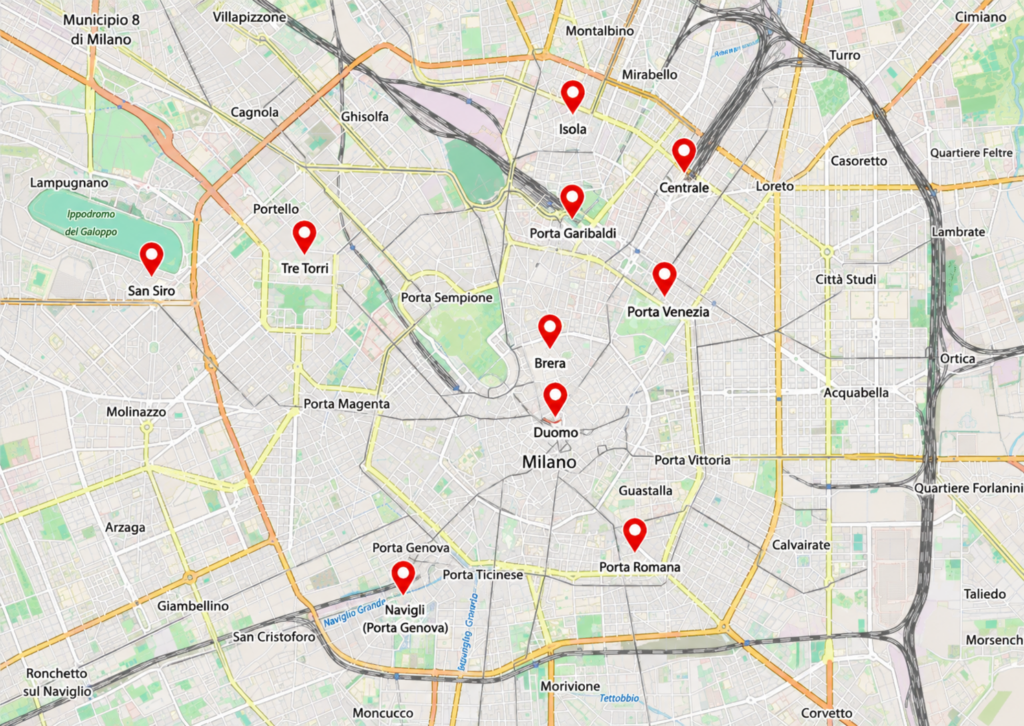
Milan Geography 101
The Quick Look
Neighborhood | Best for | Vibe | Distance to Duomo |
Duomo & Brera | First-timers | Elegant, historic, busy | 0–15 min walk |
CityLife & Isola | Families | Modern, green, calm | 20–30 min (metro) |
Porta Nuova & Garibaldi | Business travelers | Glass towers, fast-paced | 10–15 min (metro) |
San Siro & De Angeli | Football fans | Residential, stadium-close | 25–30 min (metro) |
Navigli | Nightlife lovers | Canals, bars, students | 10–15 min (metro/tram) |
Porta Romana | Nightlife lovers (quieter) | Bars, restaurants, easy access | 5–10 min (M3, 3 stops) |
Quadrilatero & Porta Venezia | Shoppers | Boutiques, Liberty architecture | 10–20 min walk |
First-Time Visitors: Duomo & Brera
If it’s your first trip and you want to wake up, step outside, and already be in Milan, this is it! The Duomo area puts you within walking distance of the cathedral, the Galleria, La Scala, and honestly, most of what people picture when they picture Milan. Brera, just north of it, softens the pace a little: cobbled streets, art galleries, the Pinacoteca, small squares where nothing much happens, and that’s the point.
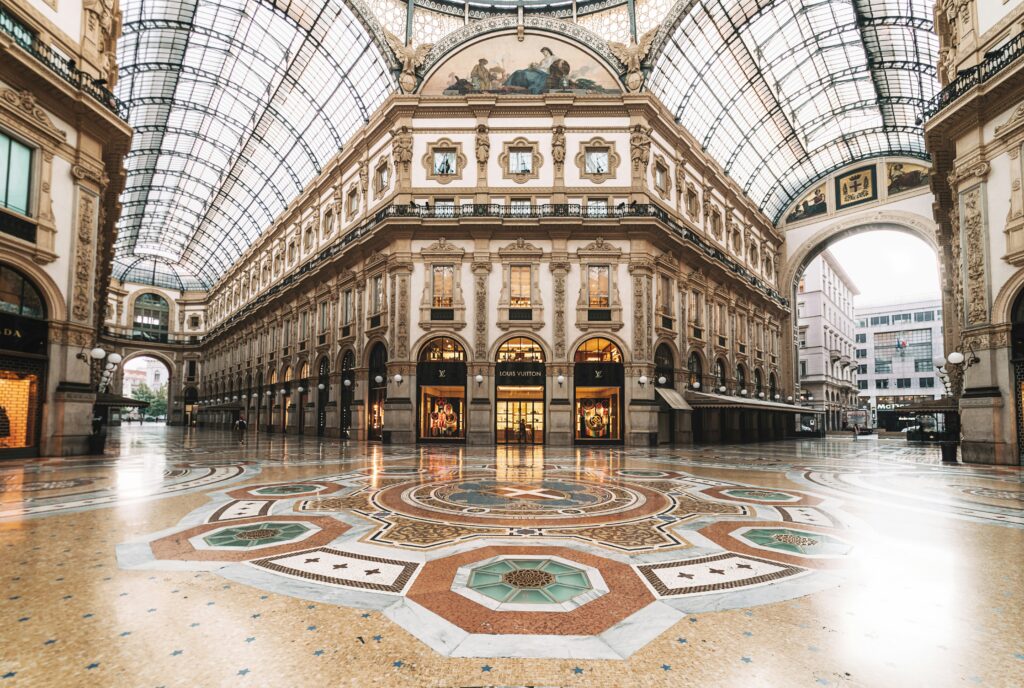
Worth knowing: this is the most touristy, most expensive part of the city, and the area right around the Duomo metro stop is a known spot for pickpockets, nothing dramatic, just the usual big-crowd caution. You’re paying for convenience here, and if it’s your first time in Milan, it’s usually worth it. If you’ve got more than two or three days, though, staying a little further out and taking the metro in for a day of sightseeing is often the smarter, cheaper move. And once you’ve chosen your neighbourhood, our guide to the best places to visit in Milan in 2 days will help you make the most of your stay.
Families tend to do better a bit outside the historic center, where the streets are wider, there’s actual green space, and you’re not navigating a stroller through a crowd every time you step outside.
CityLife (one word, it’s a redevelopment of the old trade-fair grounds) is Milan’s most modern district. The three towers sit right at its heart, and locals call them “Il Dritto, Lo Storto, and Il Curvo”: the straight one, the crooked one, and the curved one, which has to be the most bluntly Milanese way possible to name three architectural icons. They sit next to a big pedestrian shopping area and their own large park, Parco Tre Torri, one of the biggest in Milan, with wide open lawns that are genuinely nice for kids to run around in. It’s a proper park in its own right, not an extension of Parco Sempione, which is a separate green space closer to the historic center.
Isola, just northeast, has a similar family-friendly calm but with more character. It’s Milan’s design and arts district, home to the Bosco Verticale (“vertical forest”) towers and a lovely little park, the Biblioteca degli Alberi, with a small food market that’s a nice, low-key way to spend a morning.
Worth knowing: neither is walkable to the historic center; you’re looking at a metro ride (M5 for Isola, M1/M5 for CityLife) rather than a stroll. That’s the trade-off for the quiet.
Business Travelers: Porta Nuova & Garibaldi
This is Milan’s financial and corporate district, and it’s built for exactly the kind of trip where you need things to be fast, well-connected, and quiet enough to actually get work done in the evening. Glass towers, the UniCredit skyscraper, and a genuinely excellent concentration of good coffee and quick lunch spots for people running between meetings.
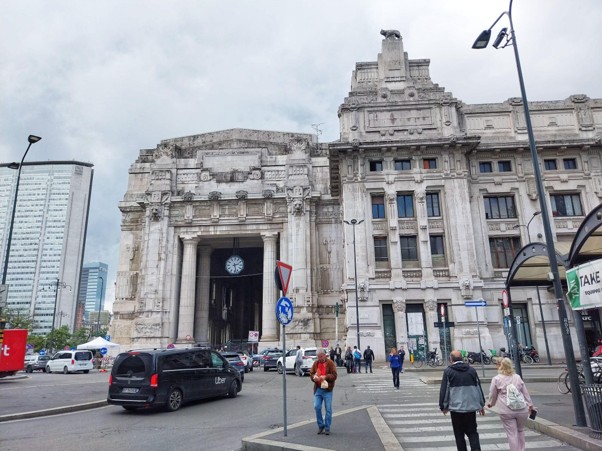
It also sits close to Milano Centrale, which matters if your days involve trains as much as meetings: the high-speed lines to Rome, Bologna, Turin, and Venice all run from there. If you’re commuting in from Malpensa, look for a Malpensa Express train heading to Centrale (those are the ones that stop at Garibaldi along the way; the Cadorna-bound trains skip it). We’ve written a separate, detailed blog on Accommodation Near Milano Centrale if that’s your anchor point; this guide is more about the wider business district it sits inside.
Worth knowing: this area empties on weekends. Great for a Monday-to-Friday trip, a little quiet if you’re hoping for weekend buzz.
Football Fans: San Siro & De Angeli
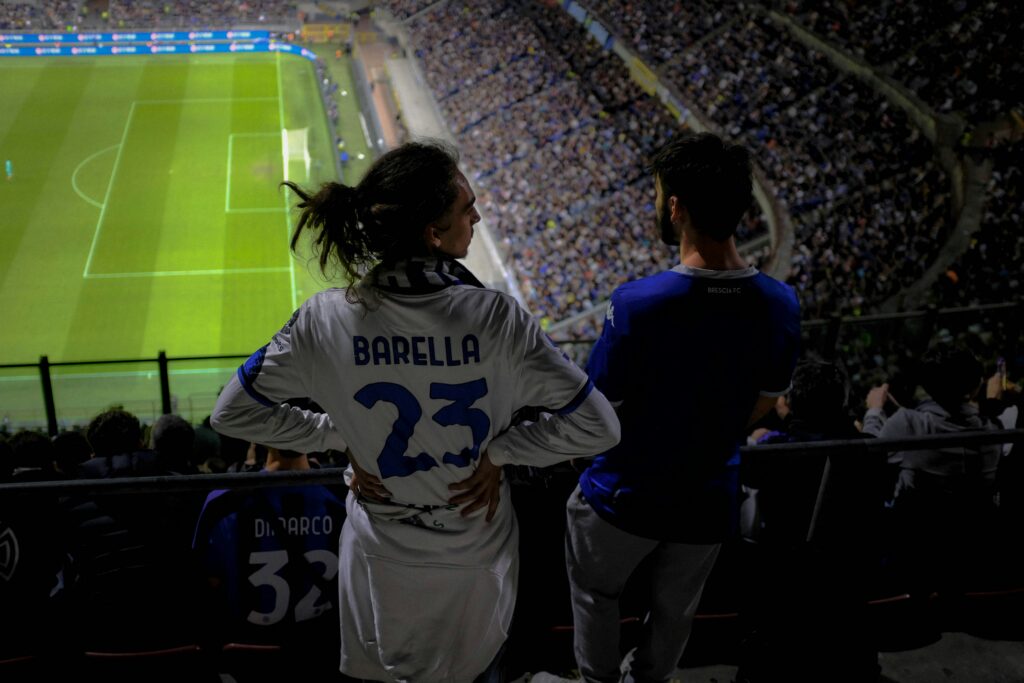
If you’re here for a match, staying near San Siro (Stadio Giuseppe Meazza, home to both AC Milan and Inter, a fact that causes genuine, low-grade tension between neighbors depending on which scarf is hanging in the window) means you’re not gambling with matchday transport chaos. The M5 lilac line has a stop right at the stadium, and on match nights it runs an intensified service, but it still gets packed, so give yourself more time than you think you need.
De Angeli, a few stops closer to the center, is a good compromise: still a short hop to the stadium, but with more of an everyday, residential Milan feel and easier access back into town for the rest of your trip.
Worth knowing: this area is genuinely residential, not built for tourists, which some people love (quieter, better value, no menu translated into four languages) and others find a bit sleepy outside of matchdays.
Nightlife Lovers: Navigli & Porta Romana
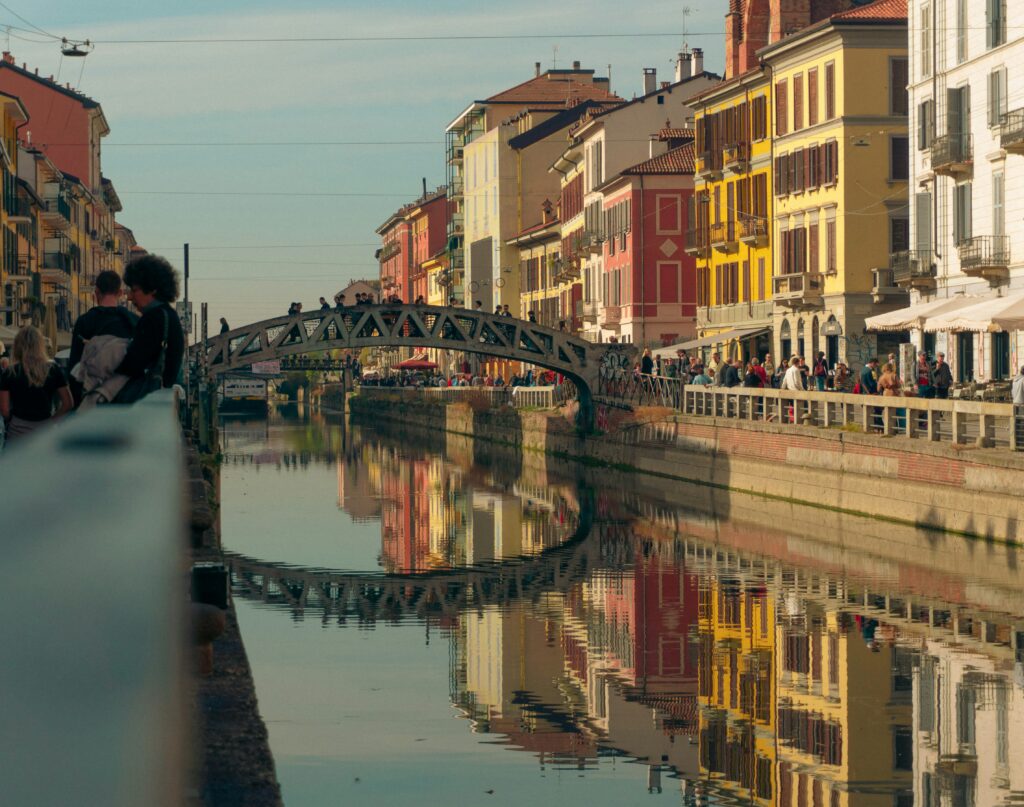
The Navigli canals are where Milan goes to have a good time after dark: aperitivo spilling out onto the water’s edge, bars that stay loud well past midnight, a young, international, slightly chaotic crowd. It’s romantic in daylight and a proper party by 11 pm, especially on weekends. (Nobody actually swims in the canals, for what it’s worth. Admire them with a spritz in hand, not a swimsuit.)
Porta Romana, just east, has picked up a lot of that same energy in the last few years but with a bit less of the crowd-crush: good bars, good restaurants, still very much alive but easier to actually hold a conversation in.
Worth knowing: if you’re a light sleeper, book a street back from the canal itself, not directly on it. And if it’s a quieter trip you’re after (an early flight, older parents in tow) this probably isn’t your neighborhood.
Shoppers: Quadrilatero della Moda & Porta Venezia
The Quadrilatero della Moda (Via Montenapoleone, Via della Spiga, Via Sant’Andrea, and the quieter Via Borgospesso tucked just behind them, one of the streets my husband’s family called home for years) is Milan’s fashion heart: the actual, original “shopping streets” that half the fashion world flies in for during Fashion Week. Staying here means stepping out your door into it, no metro required, and I hope you have a platinum credit card with no spending limit…
Porta Venezia, just beyond, is where the real, everyday shopping happens. Corso Buenos Aires is one of the longest and busiest shopping streets in Europe, with far more accessible prices than the Quadrilatero. It’s also home to Milan’s best concentration of good, unpretentious restaurants (Via Melzo is worth building a whole evening around) and its historic LGBTQ+ district, around Via Lecco.
If cafés are more your thing, discover the best Coffee in Milan and some of the cafés we keep going back to.
Worth knowing: Quadrilatero is beautiful and very expensive to sleep in. Porta Venezia gives you almost the same access with a lot more personality and at a friendlier price.
A Few Practical Notes
If budget matters more than location, areas like Loreto and Corvetto sit a bit further out but are well connected by metro and noticeably cheaper, a sensible trade if you’re spending your days out exploring anyway rather than lingering near your hotel. My husband’s family has roots right around here too, Via Porpora just off Piazzale Loreto, and Città Studi near Via Vanvitelli. Neither has ever tried to be pretty for tourists, and that’s rather the point. They’re real, lived-in Milan: university students, families, and corner bars with the same regulars for decades.
Hotel or apartment? Milan has both in abundance. Hotels are the simplest option for a short stay. An apartment tends to make more sense if you’re here for four nights or more, traveling with family, or just prefer having a kitchen and a bit more space to actually live in rather than pass through.
On safety: Milan is, on the whole, a safe and easy city to move around in, at any hour, in almost any of the neighborhoods above. The usual big-city sense applies: keep bags zipped and in front of you on the metro, be a bit more alert late at night in Navigli on a big weekend, and if you’re heading home alone very late, a cab is a small price for peace of mind. None of this should make you anxious about the trip. It’s context, not a warning.
Milan rewards you for picking the right base. Wherever you land, you’re never more than a short metro ride from anywhere else on this list, so don’t overthink it, but do pick on purpose.
And if you want my honest, biased opinion: my husband’s family, after all those other addresses, ended up on Via Ponte Seveso, right by Centrale. It’s where our own apartments are today, which either means we’re extremely consistent people or we just really like that end of town. Possibly both. If Milan turns out to be more than just a quick stop, our Mid-Term Living apartments are made for settling in rather than simply passing through. Choose from Apartment Nina, Apartment Sara, Apartment Andreas, or Apartment Simone, each with its own distinctive style and character. Whether you’re here for sightseeing, business, or simply to experience everyday Milan, we’d love to welcome you.
Conclusion
Moving to Milan for a semester, a new job, or just planning to stay long enough to want your own kitchen and front door? Our Milan town homes are built for exactly that kind of stay: a real home near Centrale, not a hotel room, with the whole city, and beyond, a tap away.
FAQs
Where should I stay in Milan for just one night?
Stay central, Duomo or Brera. You want to maximize walking distance, not commuting time.
Is Milan safe at night?
Yes, generally. See the safety note above: normal city awareness, nothing more. Wondering whether Milan is a safe city or not? Find everything you need to know and practical local tips to help you get around the city with confidence.
Where should I stay near the airport?
For Malpensa, Porta Nuova/Garibaldi puts you on the Malpensa Express line (just double-check your train is the Centrale-bound one; the Cadorna-bound service skips Garibaldi). For Linate, the M4 line now runs the entire width of the city, from the airport to San Babila (about 12 minutes, a few steps from the Duomo) and on through to San Cristoforo, crossing the other metro lines along the way, so honestly, almost anywhere central works.
Best area during Fashion Week or Design Week?
Book early, regardless of neighborhood; the whole city fills up. Quadrilatero if you want to be in the middle of Fashion Week itself; Isola or Brera if you’d rather be close to Design Week’s Fuorisalone events without paying peak Quadrilatero prices.