
Key Takeaways
- Lombard cuisine features rice, cheese, butter, and seasonal ingredients, which differentiate it from many other regional cuisines in Italy.
- Milan’s food culture is best experienced through iconic dishes such as Risotto alla Milanese and Ossobuco alla Milanese.
- Lombard cuisine offers a diverse range of dishes beyond risotto, featuring specialities such as Cotoletta alla Milanese, Asparagi alla Milanese, Panettone, Colomba Pasquale, regional cheeses, and local salumi.
- Visitors can experience authentic Milanese cuisine at institutions like Peck, which offer an authentic taste of Milanese gastronomy and showcase the city’s commitment to exceptional ingredients and skilled food preparation.
- Milanese cuisine reflects generations of family heritage, seasonal celebrations, and local customs, giving the city’s cuisine strong cultural significance alongside its distinctive flavours.
From Risotto to Panettone: The Real Food Culture of Milan
What is the regional food of the Lombard area? It’s a question I have been asking, and being answered, around the Medagliani family table for over thirty years. If you’re wondering what to eat in Milan, it’s a question I have been asking, and having answered, around the Medagliani family table for over thirty years.
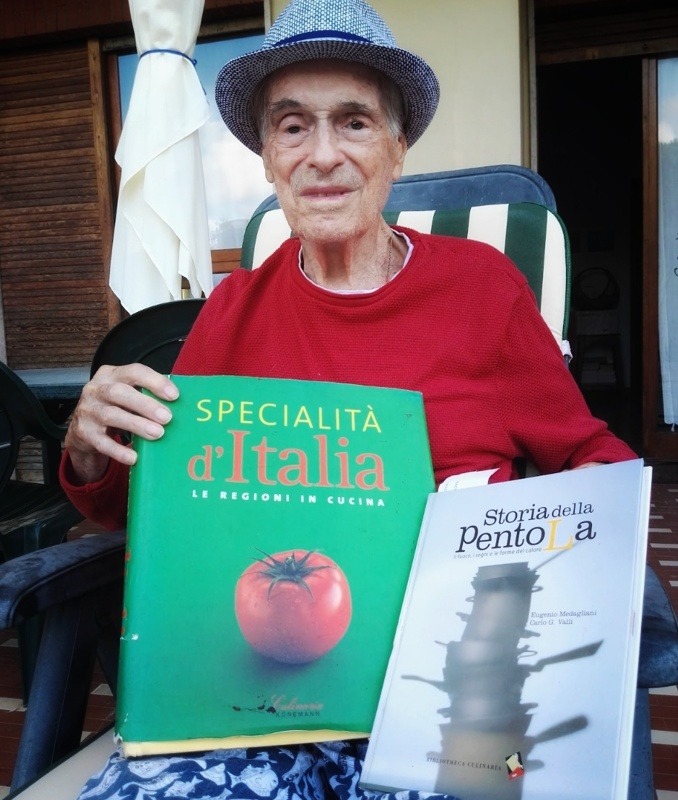
I have the great fortune to be part of the Medagliani family. My father-in-law Eugenio Medagliani was a great storyteller, and over the years I have been the recipient of many wonderful stories during family dinners about food culture, tales from chefs, discussions about what to serve and when, and what absolutely not to do.
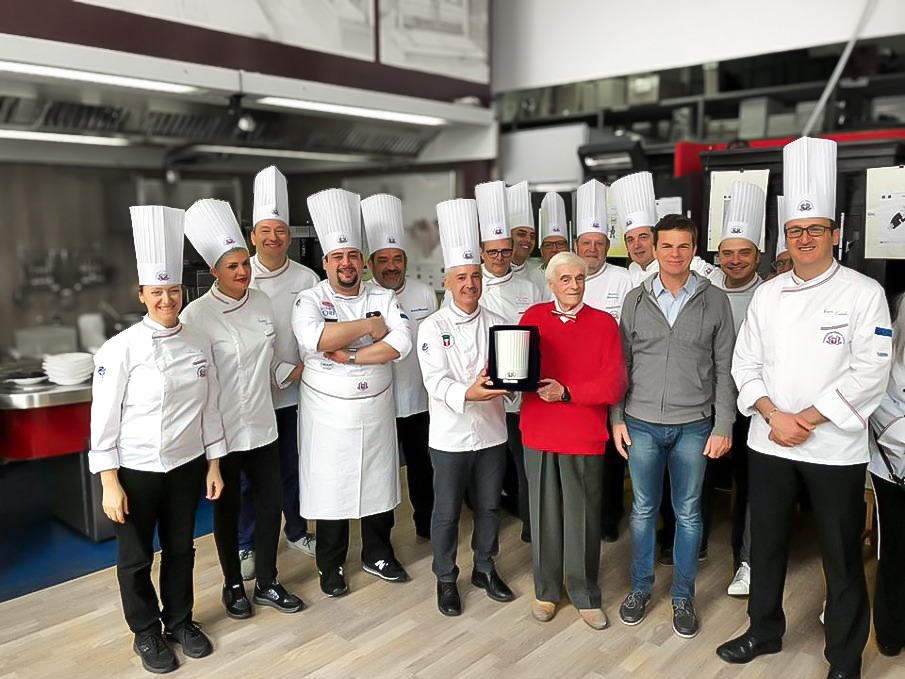
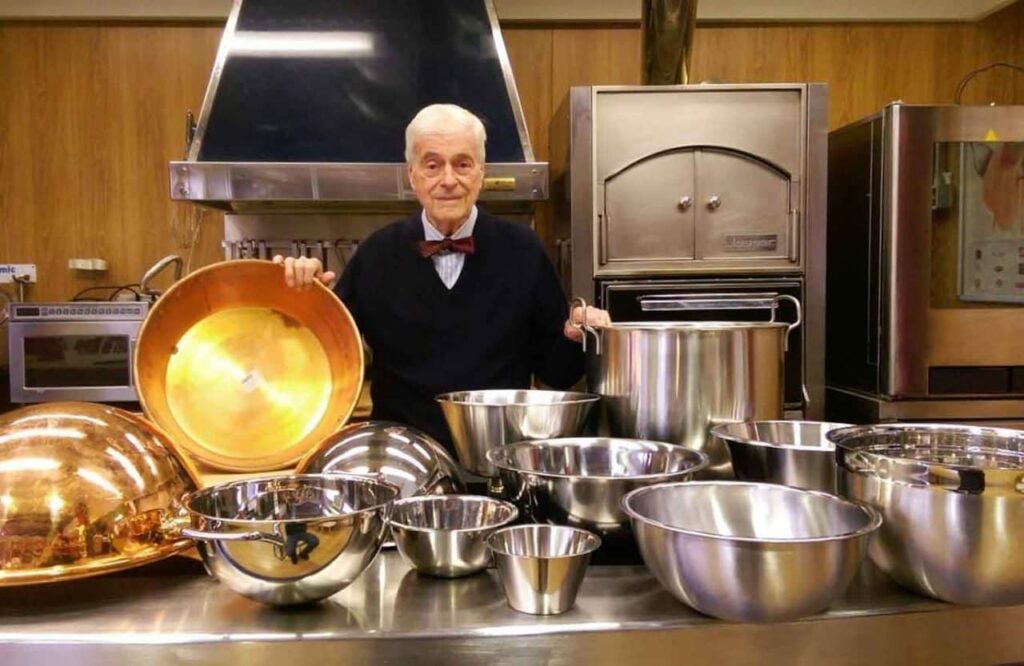
Four generations of Medagliani were beloved by Italian cooks, both in Italy and abroad, through their business selling high-quality kitchenware since 1860. Simone’s grandfather Giannino was known as Il papà dei cuochi. Through his initiative, the Associazione Cuochi Lombardia was born, and Eugenio, in his later years, served as honorary president of the national Federazione Italiana Cuochi. Both men worked tirelessly for the quality and appreciation of Italian cuisine, through their deep care for chefs, maîtres, servers, and restaurant and hotel owners. Eugenio was, in the words of those who knew him, a living encyclopaedia of Italian gastronomy.
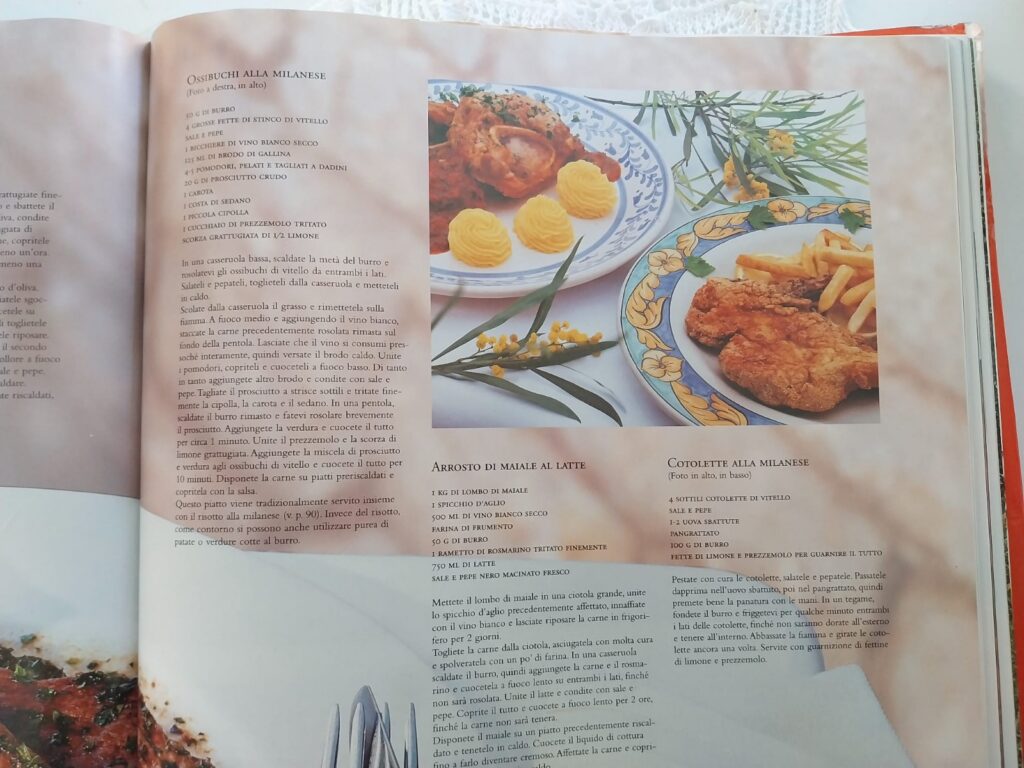
I hope I will not let them down with my attempt to summarise a little of the culinary traditions of this area. I have drawn inspiration from the beautiful cookbook Specialità d’Italia that Eugenio compiled for Könnemann Publishing.
The soul of Lombard cooking
People sometimes say that Lombardy, and Milan especially as the business capital, doesn’t really contribute much to Italian food culture. Too busy working to bother with long lunches and good wine, apparently!
But look a little closer, and you find something wonderful. The nine provinces of this region share a clear culinary identity. Rice, not pasta, is the heart of the table here, served as a hearty soup or as the soft, creamy risotto that Milan made famous. Meals end with a piece of cheese, a little robiola or Grana Padano. Butter is preferred over olive oil, and cream finds its way generously into the cooking.
There is also something very Milanese about the way people eat on ordinary days: practical, efficient, unpretentious. Minestrone, risotto, bistecca con insalata.
But when there is something to celebrate? The table tells a completely different story. Risotto with ossobuco, the casoeula, pork and vegetables all cooked together, dishes of meat and game with golden polenta. Tortelli di zucca with melted butter. Bollito misto, slow and fragrant. Nobody who has sat at a Lombard table on a feast day can seriously claim these people don’t know how to enjoy themselves.
The dishes you need to know
Risotto alla Milanese
This is Milan’s signature dish, and it is inseparable from the city’s identity. The secret is saffron, that precious golden spice that gives the risotto its beautiful colour and its distinctive, slightly floral flavour. Milanese chefs use Carnaroli rice, and the result should be soft and flowing, never stiff. It is traditionally served alongside ossobuco, and together they make one of the great pairings of Italian cuisine.
Our family sold handmade copper padelle per risotto to passionate culinary professionals and homemakers for generations. Chefs came in “pellegrinaggio” to our shop and bought things that only we had, together with a long, passionate chat with Giannino, Eugenio, or Simone about all things food and cooking.
Ossobuco alla Milanese
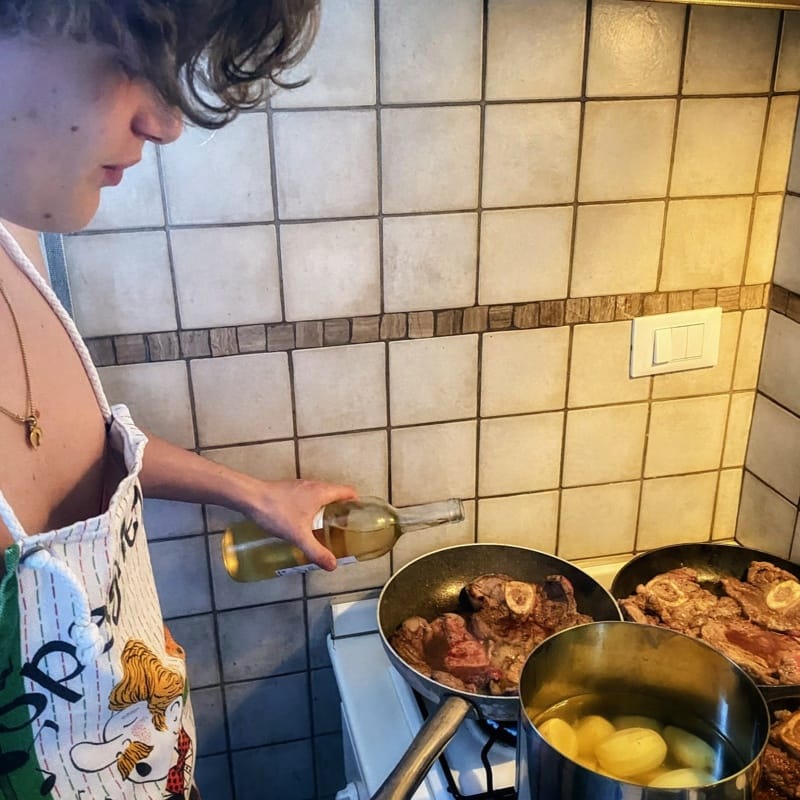
Ossobuco means “bone with a hole”, and that little hole, filled with rich bone marrow, is considered the best part. These slow-braised veal shanks are cooked low and slow until the meat falls from the bone. A spoonful of the marrow at the end, spread on a piece of bread, and Eugenio always said that if cooked correctly, there is nothing finer you could serve a guest.
Cotoletta alla Milanese
Few dishes in Italy have caused more friendly argument than the cotoletta. The Milanese are absolutely certain it is theirs, and the historical evidence is on their side. A menu from 1134, prepared for the canons of Sant’Ambrogio, already mentions breaded loin cutlets. When the Austrian general Radetzky later wrote enthusiastically about this dish to his emperor, the Milanese found it quietly amusing. Copying a recipe from oltralpe? Certainly not. The cotoletta is breaded in egg and breadcrumbs and fried in butter: not flattened, not thin, proper and proud.
Asparagi alla Milanese
In Lombardy, spring means green asparagus. Not the white variety of other regions. Here they prefer the green, left to grow freely in the sun. The classic preparation is beautifully simple: asparagus boiled and laid on a warm plate, covered with grated Grana Padano, a generous pour of melted butter, and a fried egg on top. It is the kind of dish that asks very little and gives a great deal.
Panettone
The word panettone likely comes from panetto, meaning a small loaf, in the diminutive way Milanese dialect loves to do things. It has been on Milanese tables since at least the time of Ludovico il Moro in the late 1400s.
This is the cake that brought my husband’s parents together. Eugenio and Rosa both worked at the famous Pasticceria Motta near Piazza San Babila during the Christmas season, wrapping panettoni to earn a little money while studying. She came from Diano Marina on the Ligurian coast. He loved to say that he cooked her “moonbeams” for their first dinner. Among his many qualities, he was also a poet. They were together for over sixty years.
There is also a lovely Milanese tradition connected to panettone: many families still save a piece from Christmas until the 3rd of February, the feast of San Biagio. Eating that old, dried piece is said to protect you from sore throats all year. Not a bad idea in a cold northern winter. And if food is one of your favourite ways to experience a city, we also shared a walking route through some of our favourite places to eat in Milan.
Colomba Pasquale
The Easter colomba comes with a wonderful legend. When the Lombard king Alboino conquered Pavia, he demanded gold and twelve beautiful young women. Eleven of them wept. The twelfth decided to use her last hours differently. She asked for honey, flour, and candied fruit, and baked a cake in the shape of a dove. When she offered it to the king, he was suspicious and asked her to taste it first. She did, without hesitation. He tried it too, found it extraordinary, and set her free. The dove shape has been with us ever since.
Formaggi
Lombardy is cheese country in the most serious sense. Taleggio, soft, square, with its characteristic orange crust, has been made the same way since the year 1200. Gorgonzola, creamy and complex, has been produced in the area since at least the 11th century. And grana padano, often compared to Parmigiano but with its own proud identity, is made across the Po Valley and carries a consortium seal you can look for when you buy it. At the end of a Lombard meal, a small piece of cheese is not optional. It is simply what you do.
Salumi
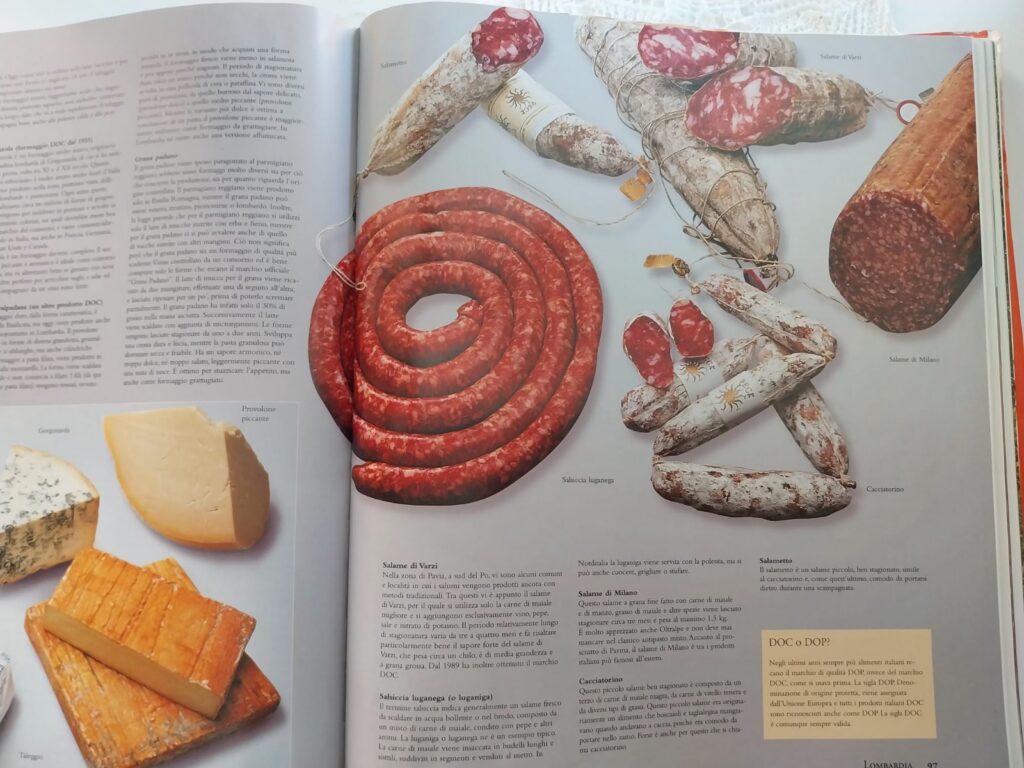
The salumi tradition here is equally serious. Luganega, the long, coiled fresh sausage sold by the metre, is a Lombard staple, wonderful with polenta or simply grilled. Salame di Milano, finely ground with its distinctive flavour, is one of Italy’s most exported products and rarely missing from an antipasto worth its name. And the cacciatorino, small, well-aged, easy to carry, gets its name from the hunters who once packed it in their bags. Some things don’t need to change.
If you’re looking to experience more of Milan beyond its incredible food, our local guide to Milan highlights some of the city’s must-visit neighbourhoods, landmarks, and hidden gems.
Peck — A Milan Institution
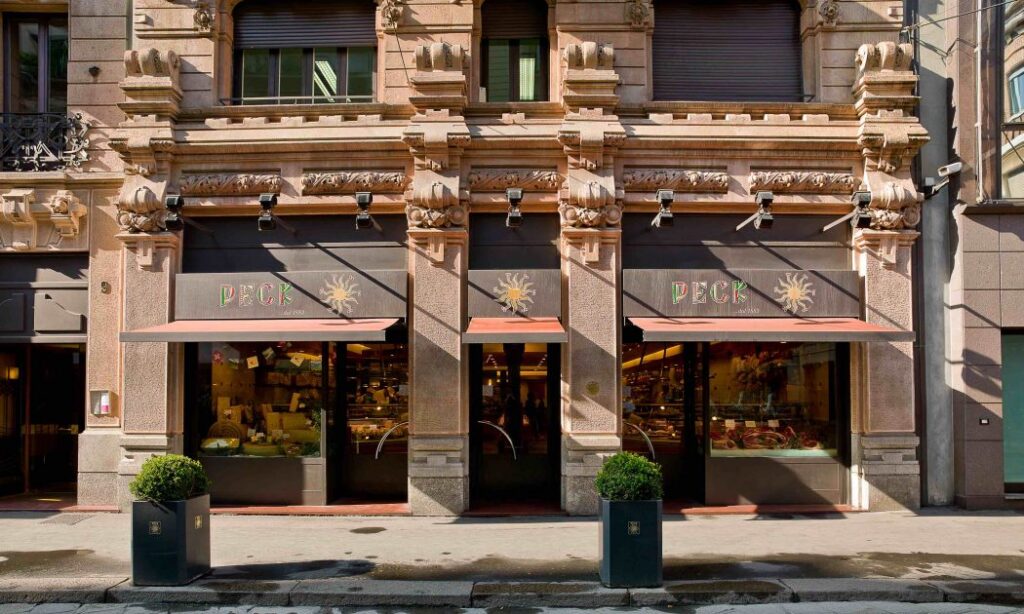
No conversation about Milanese food is complete without Peck. Founded in 1883, this extraordinary delicatessen in Via Spadari has been the temple of Milanese gastronomy for generations. Salumi, formaggi, fresh pasta, truffles, and wine spread across three floors in quantities that feel almost impossible.
Eugenio had his own Saturday ritual. Every week he would spend the morning painting in his studio on the Navigli, and on the walk home he would stop at Peck for a glass of prosecco and a few aperitivi. A small, perfect reward.
When it was still possible to visit their cellars, we sometimes brought our American restaurant clients down there, people accustomed to seeing food and wine on a grand scale. Nothing ever failed to stop them in their tracks like those ancient cellars: dark, cool, lined with ageing Parmigiano and salumi, bottles of exceptional wine stacked in the shadows. Old Milan, perfectly preserved underground. And if you enjoy discovering a city through its everyday rituals, here’s our guide to some of the best coffee places in Milan.
The prices, as Simone always says, are da orefici, jeweller’s prices. But then, this is not a supermarket. It is a piece of Milanese history you can eat. And if you feel like seeing a little more beyond the city between meals, some of our favourite easy day trips from Milano Centrale are only a short train ride away.
A gift for the curious
If all this has made you hungry for more, you might love the series I created with Eugenio in his late years: 25 episodes where he talks about the history, the curiosities, and the culture behind the tools of Italian cooking. Copper pots, historic utensils, the science of the perfect pan. A treasure trove of stories and wisdom from older generations.
I perché di Medagliani – If you’d like to dive deeper into the history and traditions of Italian cooking, you can watch the complete YouTube playlist here. I hope you enjoy it as much as we did creating it.
Come and stay with us
If this little journey through Lombard food has given you a taste for Milan, our family would love to welcome you in person.
Our apartments in Via Ponte Seveso 43 and Via Razza 8 are all a 10-minute walk from Milano Centrale, with short-term stays from one night, or mid-term stays from one month up to 18 months for those who need a proper home base in the city. All fully furnished, ready for you to come with just your suitcase.
Milan is best experienced slowly. Come and taste it for yourself.